Showing posts with label Industrial Ultrasonic Cleaners. Show all posts

Wednesday, February 19, 2020

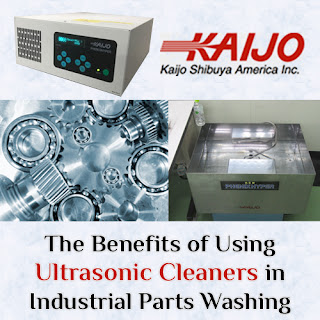
The Benefits of Using Ultrasonic Cleaners in Industrial Parts Washing


https://www.kaijo-shibuya.com/the-benefits-of-using-ultrasonic-cleaners-in-industrial-parts-washing/
Industrial ultrasonic cleaning is an excellent alternative to traditional cleaning methods which involve mechanical scrubbing and the use of harsh chemicals and solvents. It delivers excellent cleaning performance that is fast and effective while considerably reducing costs.


The cavitation bubbles produced by the ultrasonic cleaning system delivers a powerful mechanical scrubbing action. The cavitation bubbles quickly and thoroughly remove contaminants from the surfaces of parts made of varying materials and with various shapes and sizes.


Industrial ultrasonic cleaners provide many different benefits that include:


1) Smaller environmental footprint – The use of ultrasonic cleaners reduces the environmental footprint as it uses only water or mild detergents that do not need special handling and disposal.


2) Increased worker safety – Harsh cleaning chemicals require special handling and can result in spills or exposing workers to hazardous fumes. Ultrasonic cleaners do not require the use of chemicals and can do the process automatically, leading to reduced human monitoring and increased safety.


3) Higher throughput – Ultrasonic cleaners operate more quickly compared to traditional cleaning methods. The right ultrasonic frequency, cleaning power, cleaning solution, temperature and detergent needs to be selected to achieve the optimum cleaning speed.


4) Improved cleaning performance – The microscopic cavitation bubbles produced by the ultrasonic cleaners appear everywhere in the cleaning solution, which leads to a thorough cleaning action. The bubbles can even clean hard-to-reach places, including parts that are delicate or have complex shapes.


5) Cost savings – Ultrasonic cleaners are cost-effective because they do not require the purchase, storing, handling and disposal of cleaning chemicals. Instead, ultrasonic cleaners use only water or water with mild detergents. There are also no compliance costs associated with the use and disposal of toxic chemicals.


6) Improved output and part longevity – When parts are cleaned completely through ultrasonic cleaning, they last longer and perform better. Traditional cleaning cannot reach inaccessible places and can leave contaminants behind on the surface, which leads to damage to the parts. Ultrasonic cleaners remove all dirt, even in inaccessible places, leaving the parts completely cleaned and free from contaminants.


For more details read the complete article, “The Benefits of Using Ultrasonic Cleaners in Industrial Parts Washing”. If you have any questions about the use of industrial ultrasonic cleaners for your application, contact Kaijo Shibuya at 408-675-5575 or email info@kaiijo-shibuya.com to schedule a free consultation.

Monday, January 27, 2020

Selecting the Best Frequency for Ultrasonic Cleaning Applications

https://www.kaijo-shibuya.com/selecting-the-best-frequency-for-ultrasonic-cleaning-applications/
The success and effectiveness of using industrial ultrasonic cleaners depend on matching the system frequency to the parts to be cleaned, and the type of contaminants being removed. An industrial ultrasonic equipment manufacturer with experience can help companies select the best frequency and ensure their ultrasonic cleaning performance is at an optimal level.
Ultrasonic cleaning depends on the generation of microscopic bubbles in the cleaning solution. The transducers in the ultrasonic cleaning system convert electric high-frequency signals into sound waves that travel through the cleaning bath. These sound waves turn into cavitation bubbles that do the cleaning and scrubbing action on the parts to be cleaned.
Low frequencies - Low frequencies for ultrasonic cleaning are usually below 40 kHz, while typical cleaning frequencies are 26 kHz and 38 kHz. Low-frequency waves produce comparatively large, energetic bubbles that deliver powerful scrubbing action. They deliver high-energy cleaning for robust parts with hard surfaces and for heavy contamination. These frequencies are suitable for metal, glass, or porcelain parts contaminated with oil and grease, uncoated glass components, jewelry coated with production residues, and some medical equipment.
Mid-range frequencies - Mid-range frequencies range from 40 kHz to 200 kHz, with typical frequencies being 78 kHz, 130 kHz, and 160 kHz. Mid-range frequencies produce bubbles that are for cleaning more fragile components, but they can still remove substantial surface dirt. These frequencies are suitable for hard disk drives, solar cells, LCDs, and parts made of ceramic and aluminum.
High frequencies - High frequencies range usually goes beyond 200 kHz, with typical frequencies being 200 kHz, 430 kHz, 950 kHz, and 1/6 MHz. High-frequency waves produce smaller bubbles for cleaning the most fragile and delicate components. The smaller size and the less robust energy of the bubbles ensure that the parts won't be damaged. These frequencies are suitable for cleaning semiconductor components, silicon wafers, LEDs, and delicate medical instruments.
Kaio provides expert help to customers in selecting the right industrial ultrasonic cleaner that meets their specific cleaning application requirements. Learn more by reading the complete article titled "Selecting the Best Frequency for Ultrasonic Cleaning Applications." Contact Kaijo Shibuya at 408-675-5575 or email info@kaijo-shibuya.com for a free consultation or quote.

Monday, December 23, 2019

How Ultrasonic Cleaners Protect Components from Rust


Metal components often suffer from rust and/or corrosion if they are not treated and protected, even stainless steel. To prevent corrosion, metal is treated with various finishing processes such as passivation, which consists of increasing the thickness of the oxide layer.

However, for the metal finishing to be effective, it first needs be completely clean before the process is applied. If the part is not completely clean, the oxide layer may leave gaps, which is possible for the rust to attack through the holes. Using industrial ultrasonic cleaners means the impurities are removed and contamination is not an issue.

When contaminants are present, they can prevent passivation process keeping acid away from the surface of the metal. This keeps the thicker layer of chromium oxide from forming. When the surface of the metal is not cleaned completely, passivation may allow some surface areas to rust and may damage the part itself.

Industrial ultrasonic cleaners are the ideal solution to clean various parts, including metals that are to be treated with anti-corrosion finishing processes. Ultrasonic cleaners remove impurities from the metal part surface to allow the finishing to produce a seamless oxide layer.

Industrial ultrasonic cleaners use high-frequency sound waves in a cleaning tank of water to dislodge particles and contamination from the surfaces of metal parts. In an ultrasonic cleaning system, transducers are immersed in a cleaning tank and produce the sound waves in the liquid. The ultrasonic sound waves create microscopic cavitation bubbles that deliver a scrubbing action when in contact with the surface of the parts which are being cleaned. Dirt, oil, grease and other contaminants are easily removed.

Kaijo provides a full product line of Industrial Ultrasonic cleaning equipment that can be used in a wide range of cleaning applications to effectively remove contamination for parts and components. This is something that traditional cleaning with manual scrubbing or using harsh chemicals cannot easily achieve.

The complete article, “How Ultrasonic Cleaners Protect Components from Rust” goes into further detail. If you have questions or would like to set up a free consultation to discuss your particular needs, contact Kaijo Shibuya by email at info@kaijo-shibuya.com or call 408-675-5575.

Tuesday, October 29, 2019

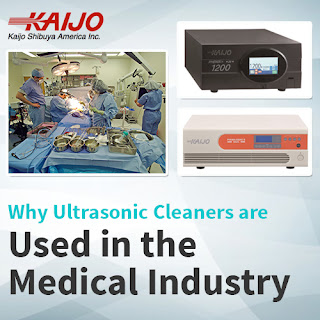
Why Ultrasonic Cleaners Are Used in the Medical Industry


Since medical devices are often delicate and have high cleaning standards, industrial ultrasonic cleaners provide an ideal solution, offering gentle cleaning and complete removal of contaminants.

Medical devices that include surgical instruments and medical implants are used inside the body and are subject to extremely high standards of cleanliness and sterility. In addition, medical devices have complex structures that mean intricate surfaces, tiny crevices, dead-end holes and even inside slots and threaded holes.

Many medical devices cannot be exposed to heat, harsh cleaning chemicals and intense scrubbing which are typically used in traditional cleaning methods. Not only these methods costly and cause potential damage to medical devices, but they also do not guarantee that they provide complete cleaning.

Industrial ultrasonic cleaners rely on sound waves, which produce microscopic cavitation bubbles in the cleaning solution. The formation and collapse of these bubbles agitate the cleaning solution near the medical device surfaces to dislodge any dirt or contamination that may be present.

Low ultrasonic frequencies produce comparatively large bubbles with an intense cleaning action for rugged devices. High ultrasonic frequencies, on the other hand, produce smaller bubbles with a gentle cleaning action which is the frequency used to clean delicate parts such as medical devices.

No matter how complex medical devices are, once they are immersed in the cleaning solution, the microscopic cavitation bubbles are formed inside the tiniest crevices and dislodge any contaminants, cleaning down to the original surface. A complete cleaning is extremely important, especially for implants. If these implants still have leftover contaminants due to improper and incomplete cleaning, it could result in the rejection of the implants.

 While industrial ultrasonic cleaning systems effectively remove contaminants, they do not, by themselves, kill or eliminate bacteria. Thus, adding a sterilizing solvent to the cleaning solution helps the cleaning action process and the action of the cleaning bubbles heightens the sterilizing effect as well.

For more information read the complete article, “Why Ultrasonic Cleaners Are Used in Medical Industry”. Contact Kaijo for a free consultation or quote by email info@kaijo-shibuya.com or call 408–675–5575 to discuss your cleaning requirements.

Monday, August 12, 2019

Top 5 Things to Consider When Buying an Ultrasonic Cleaner

Industrial ultrasonic cleaners have become the preferred choice for many manufacturing and research facilities. They provide a more effective solution for a lot of cleaning applications and they clean more quickly than traditional cleaning methods that involve hard manual scrubbing and the use of caustic cleaning chemicals.

1) Ultrasonic cleaner frequency
The ideal frequency of an ultrasonic cleaner determines the level and size of cavitation bubbles which produce the cleaning action in the cleaning solution. Low frequencies result in bigger bubbles which are ideal for robust cleaning of parts with hard surfaces. Higher frequencies produce smaller bubbles that are ideal for gentle cleaning of soft and delicate parts.

2) Ultrasonic cleaning tank size
The ultrasonic tank contains the cleaning solution where you immerse the parts to be cleaned. The cleaning system tank size is important in relation to the size of the parts to be cleaned. These parts must fit adequately into the tank.

If many different parts must be cleaned, a basket may be needed. Baskets keep the small parts clear of the tank bottom and sides because the vibrations against the tank walls during cleaning may damage the parts.

3) Ultrasonic cleaner power
Power is also an important factor when choosing an ultrasonic cleaner. Turnkey systems automatically have the right power levels for the ultrasonic system, however, if the ultrasonic generator, transducer, and cleaning tanks are purchased separately, adequate power needs to be generated based on the size of the tank. The ultrasonic power rating, as well as the configuration of transducers, can affect cleaning performance.

4) Cleaning with mild soaps and detergents
Industrial ultrasonic cleaners usually clean with deionized (DI) water alone, however, mild soaps and detergents may be required to remove more stubborn contaminants and to facilitate cleaning. For contaminants that are harder to clean, a solvent specific to the contaminant will often speed up cleaning and improve cleaning performance.

5) Using heat to improve cleaning performance
Sometimes the application of heat is used in ultrasonic cleaning to soften and remove heavy contamination to speed up cleaning. If heating is to be used, the tank and the transducer must be able to operate in temperatures up to 100 degrees Celsius. The tank must be fitted with the heater and the parts to be cleaned should also be able to withstand the high temperatures. Depending upon the contaminants to be cleaned, the cleaning process may take more time.

The key to buying the right ultrasonic cleaner is looking at the right characteristics and features:
For more details read the complete article “Top 5 Things to Consider When Buying an Ultrasonic Cleaner”. For a free consultation or quote contact Kaijo at 408–675–5575 or email to info@kaijo-shibuya.com.

Wednesday, July 24, 2019

Can Ultrasonic Cleaners Clean Aluminum Parts?

Ultrasonic cleaners are quite versatile. They can clean hard, rugged parts such as those made from brass or steel – even when they are heavily contaminated. Low frequencies are ideal in cleaning such parts quickly and thoroughly, but how about parts made of aluminum? Can industrial ultrasonic cleaners also be used to clean them as well?

Getting rapid and effective cleaning of aluminum parts is, in fact, more difficult. Since aluminum is a softer metal, cleaning aluminum parts requires more care and attention to prevent damage. At the same time, aluminum reacts with both acidic and base cleaners, so a neutral cleaning solution is required for an ultrasonic cleaning bath.

In general, parts with heavy contamination are cleaned with lower frequencies (between 19.5 kHz and 26 kHz) because the cleaning action of the cavitation bubbles is more intense. The cavitation bubbles also appear larger and produce high-energy blast when they collapse at sound wave peaks. This formation and collapse of bubbles generate robust cleaning action, which is effective for cleaning hard parts such as brass or steel parts.

For cleaning more fragile parts or parts with softer surfaces, a higher frequency (38 kHz and higher) must be used. The high frequency produces smaller and less energetic cavitation bubbles that will not damage aluminum parts.

If the cleaning application regularly cleans a variety of parts, including steel and aluminum parts, an ultrasonic cleaning system that can produce two or more cleaning frequencies should be used. That way, steel, and similar hard and rugged parts can be cleaned quickly at low frequencies. For aluminum parts, higher frequencies are used that produce smaller (low energy) cavitation bubbles that typically result in prolonged cleaning times.

Ultrasonic generators need to produce one or more frequencies or a range of frequencies that is right for aluminum parts.  There are other measures that can be applied for faster ultrasonic cleaning at all frequencies, but especially at high frequencies. These include using heat and/or adding cleaning agents.

Depending on the type of the contaminant to be removed, cleaning agents are usually acidic or base. Since aluminum is highly reactive to both acids and bases, neither of these cleaning agents is used in an ultrasonic bath.

Based on these restrictions, the best option for cleaning aluminum parts is to use an industrial ultrasonic cleaner at a high frequency in a heated bath with a neutral cleaning agent. The heat softens the contaminants while the neutral cleaning dissolves them. The high frequency produces small, low-energy bubbles that will clean even the most intricate aluminum parts without damaging them. This combination will produce the best cleaning results.

Read the recently published complete article “Can Ultrasonic Cleaners Clean Aluminum Parts?” to learn more. Contact Kaijo for a free consultation at 408-675-5575 or email info@kaijo-shibuya.com to discuss your ultrasonic cleaning requirements. 

Thursday, July 18, 2019

How Ultrasonic Transducers Work and Are Used in Industrial Cleaning Applications


The role of a transducer in an ultrasonic cleaning system is converting the electric high-frequency signal (produced by the ultrasonic generator) into physical sound waves in the cleaning solution. Ultrasonic cleaning transducers can work at different frequencies and produce enough power to fill the cleaning tank with ultrasonic waves.

Ultrasonic cleaning transducers consist of a thick metal plate and active parts that vibrate when an electric signal is applied. When the ultrasonic waves pass from the transducer's metal plate through the cleaning solution, the wave troughs create low-pressure regions that generate cavitation bubbles. The bubbles form in the wave troughs and collapse in the ensuing wave peaks, releasing jets of energy. The collapse of the bubbles dislodges the dirt and contamination from the surface of the parts being cleaned.

In this way, the transducer turns the electric signal from the generator into physical scrubbing and cleaning action.

There are two types of transducers according to materials:

    Piezoelectric transducer – Historically, they were constructed from delicate materials and thus had a relatively short useful lifespan when used in ultrasonic cleaning applications. The active parts consist of piezoelectric material that changes shape in tune with the vibration of the electric signal. However, recent advancements in piezoelectric materials have contributed to the re-emergence of the piezoelectric transducer. The newer materials are more rugged and can resist even the highest megahertz frequencies.
    Magnetostrictive transducer – These consist of metal plates and coils of wire that are not easily damaged. The metal plates vibrate in tune with the high-frequency magnetic field created by the electric signal. The use of higher frequencies require shorter plates, however, there is a limit on reducing the size of the plates. As a result, magnetostrictive transducers can only be used for the lower frequencies.

There are different types of transducers can be used:

    Immersible transducer – an independent unit with a sealed case and waterproof cable attached. As the name implies, it is usually immersed in the cleaning solution and can be placed into an ultrasonic tank to produce the required ultrasonic sound waves.
    Bolt-on transducer – the most appropriate for new installations with a new cleaning solution tank. It can be bolted onto the sides or the bottom of the cleaning tank.
·       Permanently mounted transducer – used with turnkey ultrasonic cleaning systems that are ready to operate as a self-sufficient system.

The complete article titled “How Ultrasonic Transducers Work and Are Used in Industrial Cleaning Applications” provides more details on this topic. For a free consultation or quote contact Kaijo at 408-675-5575 or email to info@kaijo-shibuay.com.

Thursday, June 27, 2019

Important Questions Customers Ask about Ultrasonic Cleaners (Part Two)


Do you have questions about using ultrasonic cleaners for your industrial cleaning application? Here are some more of the important questions customers often ask about using Kaijo Shibuya's industrial ultrasonic cleaners and our answers.

1) “Do I need to use a heater?”
It depends on your specific cleaning application. Ultrasonic cleaning systems do not normally
use or require a heater but it can speed up the cleaning process.

2) “What does Sweep Mode do?”
As the ultrasonic waves spread through the cleaning tank, the parts to be cleaned interfere with the ultrasonic waves, creating spots where the waves become stronger and other areas where the waves become weaker. This can cause uneven cleaning. To avoid this, the
sweep mode is used to automatically vary the ultrasonic frequency slightly, which causes the weak spots to move around. The result is a more even cleaning.

3) “Is the use of auto-tuning important?”
Yes, with auto-tuning the generator monitors and adjusts the power that is conducted to the transducer array. This allows the system to maintain the ideal calibration as the conditions change in the process tank during operation. This means any changes to temperature, water level, or chemical changes will not affect the power level in the cleaning tank. 

4) “What ultrasonic frequency should I use?”
Low frequencies result in larger cavitation bubbles that deliver an intense cleaning action – you should use this type of frequency when you clean robust parts such as metal parts. High frequencies, on the other hand, result in comparatively smaller cavitation bubbles that deliver a less energetic cleaning action. You should use
the lowest frequency that will not damage delicate the parts that are being cleaned.

Our recent article has additional information for each of the questions above, as well as eight others. You can read them by going to the complete article “Important Questions Customers Ask About Using Ultrasonic Cleaners.” If you have questions not included in the list, or if you would like to set up a free consultation, call us at 408-675-5575 or send an email to info@kaijo-shibuya.com.

Thursday, June 20, 2019

Important Questions Customers Ask about Ultrasonic Cleaners (Part One)


The following are some of the key questions that customers asked about selecting and using industrial ultrasonic cleaners, especially when they use them for their specific applications.

1) “When should I use an ultrasonic cleaner?”
You should use an ultrasonic when you want a quick, thorough and more efficient cleaning action without the use of harsh cleaning chemicals or mechanical scrubbing. It is important to choose the right power, frequency, type of transducer and the size of the unit to arrive at an ideal and desirable cleaning result. It also takes the right type of ultrasonic cleaning system to do it.

2) “How do ultrasonic cleaners work?”
The ultrasonic generator produces a high-frequency electric signal which is converted to ultrasonic waves in the cleaning solution by the transducer. The cavitation bubbles form in the ultrasonic waves. When the bubble collapse, they deliver a powerful scrubbing and cleaning action that dislodges dirt from the surfaces of the parts that are being cleaned.

3) “How do I select the right equipment?”
The best way for you to select the right industrial ultrasonic cleaning system is to discuss your requirements with your manufacturer/supplier. They should have extensive experience and be willing to offer advice on how to achieve your cleaning goals. Can existing tanks be re-used? Do you clean one kind of part or multiple parts? Do you need additional measures like heat or mild cleaning solvent? There are many factors that can influence your decision in choosing the best solution for you.

4) “How do I specify equipment size?”
Parts to be cleaned must be immersed within a cleaning solution in a cleaning tank large enough to hold the parts. Oddly shaped parts may require the use of a custom tank size depending on the size and shape of the part.  But if you clean mostly small parts or delicate parts that can easily break, you will need a parts basket to support them and to prevent them from touching the bottom and sides of the tank as the vibration might cause breakage. If you clean with many different types of parts of various sizes, the tank needs to accommodate the largest part.

See more answers to questions often asked by reading our complete article “Important Questions Customers Ask About Using Ultrasonic Cleaners.” If you have questions not included, or would like to set up a free consultation, call 408-675-5575 or send an email to info@kaijo-shibuya.com.


Wednesday, May 29, 2019

Using Industrial Ultrasonic Cleaners to Clean Disk Drives


Disk drives and components that include aluminium disk platter blanks and metal read/write heads are usually manufactured in standard industrial facilities. The processes used in their fabrication includes machining, stamping, punching, polishing, and molding using industrial chemicals for cooling, lubrication and as abrasives.

Before they are sent to special facilities for assembly, the hard drive components arriving from the industrial manufacturer must be cleaned thoroughly. Traces of industrial chemicals, contaminants added during shipment and particles adhering to platter surfaces must be removed completely. The components of hard disk drives must be especially clean, since the heads float very close over the platter surface and excessive contamination will not allow them to gather and store data.

High performance industrial ultrasonic cleaners can perform these types of cleaning tasks quickly and effectively. An industrial ultrasonic cleaning system produces microscopic cavitation bubbles in the solution of a cleaning tank. The bubbles form and collapse in time with the ultrasonic frequency. When a bubble collapses by the surface of a hard disk component, it produces a scrubbing action that removes dirt and contaminants. The bubbles form wherever the cleaning solution can penetrate, even around crevices, tinier holes and irregular shapes of disk read/write head.

To achieve optimum cleanliness, hard disk drive manufacturers usually use several frequencies to clean various components to remove specific contaminants. Deionized water is the preferred cleaning solution since cleaning agents leave traces that then have to be removed as well. For components that have surface lubricants, a mild detergent and/or heating the cleaning solution may make complete removal easier.

Kaijo offers free consulting to help customers choose the right industrial ultrasonic cleaners that will meet their requirements. Read the complete article “Using Industrial Ultrasonic Cleaners to Clean Disk Drives” to learn more. If you would like a free consultation or have questions, contact Kaijo at 408-675-5575 or email info@kaiijo-shibuya.com.

Tuesday, April 23, 2019

How Ultrasonic Cleaners Effectively Clean Industrial Machined Parts


Machined parts that come directly from a production environment will be contaminated with a variety of substances. These parts may have picked up contaminants from the shop environment and machining can often leave particles on the machined surfaces. Industrial ultrasonic cleaners offer an efficient and cost-effective solution to meet these types of cleaning needs.

Contamination can be harmful especially if machined parts are used in systems which have high levels of cleanliness. These requirements are needed in certain industries such as food, pharmacy, and medicine.

There are many ways to clean machined parts. Cleaning and rinsing machined parts with solvents may remove the contaminants with simple geometries but they cannot clean the intricate crevices and holes. Plus, rinsing may leave residues as well. Manual scrubbing, another cleaning option, may remove contaminants but may damage the machined surfaces.

That's why ultrasonic cleaning is the best alternative to these traditional cleaning methods, since it effectively removes all grease, oil, dirt, particles and all other sorts of contaminants.

Ultrasonic cleaning starts with the ultrasonic generator which sends an electric high-frequency signal to the ultrasonic cleaning transducers immersed in the cleaning solution. The ultrasonic waves create cavitation bubbles which form in their troughs and collapse in the wave peaks. This formation and collapse of bubbles in the liquid result in a powerful scrubbing and cleaning action as the bubbles effectively dislodge dirt and other foreign particles from the machined surfaces.

One of the primary benefits of using industrial ultrasonic cleaners is that the bubbles work where there is a cleaning solution, and you can select the frequency range as to how intense the cleaning you would like it to be. As a result, cleaning is thorough and effective around both simple surfaces and more intricate crevices, holes and along the ridges. No need to use harsh chemicals that may leave residues, or mechanical scrubbing that may damage the machined parts.

The article “How Ultrasonic Cleaners Effectively Clean Industrial Machined Parts” explains more details. For more information or to get a free consultation on how ultrasonic cleaners can be used for your cleaning application, contact Kaijo at 408-675-5575 or by email at info@kaijo-shibuya.com.

Tuesday, March 26, 2019

How to Specify Equipment Size and Options for an Ultrasonic Cleaner

Selecting the right equipment size and options for industrial ultrasonic cleaners is just as important as using the right frequency to obtain optimum cleaning performance. Depending on the cleaning application requirements, either a flexible system or a system designed for one particular task may work best.  Also selecting the corresponding options will influence how the system can be used.

In ultrasonic cleaning systems, the parts to be cleaned are immersed in a solution contained within ultrasonic cleaning tanks. The tank should be big enough to hold the largest parts or parts with unusual shapes (for tanks of custom shapes), but the power of the system also has to be adequate to fill the tank with ultrasonic sound waves.

Small or delicate parts may be easily damaged by vibrations if they come into contact with the walls and/or bottom of the tank. Placing the parts in a basket will help in reducing the possibility of vibration damage, so the basket has to be large enough to hold the parts and the tank has to be large enough as well to hold the basket.

Ultrasonic transducers can be immersible, bolt on or permanently installed on the cleaning tank. Among the three, immersible transducers are the most flexible because they are independent units that can be placed into any cleaning tank, whenever they are needed. Bolt-on transducers can be removed or replaced when needed, while mounted transducers are usually the part of a turn-key ultrasonic system that can’t easily be changed.

Ultrasonic cleaning generators produce an electrical signal at the selected ultrasonic frequency. A generator can be designed to produce just one frequency, several frequencies or a wide range of frequencies. Depending on the cleaning requirements and the application, an ultrasonic system may need a generator that produces one or multiple frequencies.

Customers can choose 
industrial ultrasonic cleaners that are turn-key, or they can have them assembled from the individual components to meet their requirements.


Read the complete article, “How to Specify Equipment Size and Options for an Ultrasonic Cleaner” to learn more. For questions or to schedule a free consultation, contact Kaijo at 408-675-5575 or email info@kaijo-shibuya.com.

Wednesday, January 23, 2019

How Ultrasonic Cleaners Are Used in Flat Panel Glass Processing

The flat panel glass is used in many products including flat screen products. The manufacturing steps in flat panel glass processing involve the application of coatings, adding semiconductor functions and special treatments of the glass. Manufacturing processes also often leave residues and the glass itself can pick up dirt and contaminants from the shop environment. Before it can be processed further, flat panel glass must be effectively and completely cleaned. Industrial ultrasonic cleaners used in these applications only require the use of mild detergents is safe for workers and the environment.

After flat glass sheets have been cut, the edges need to be polished and the corners rounded. The resulting flat panel glass that has a specific size and shape will then go through additional processing.
The additional process steps can include the addition of color or polarizing filters, layers for liquid crystal displays or chip on glass applications. For each of these process steps, having a clean glass surface is essential. Industrial ultrasonic cleaners are essential to the cleaning process to ensure surface contamination is removed and ensure quality flat panel glass products are produced.

While each of the process steps requires cleaning glass panels, the actual cleaning requirements needed for each steep may be different. For rough cleaning and removal of heavy contamination from the glass itself, the strong cleaning action from a low-frequency ultrasonic system may be appropriate. For filter coatings and chip on glass cleaning requirements, however, higher-frequency systems delivering gentle cleaning without damaging delicate films and components may be required. Since there are many cleaning applications in flat panel manufacturing specific requirements and customized ultrasonic systems may be required.


Kaijo can help flat panel manufacturers effectively use ultrasonic cleaning systems in their production lines to ensure high-quality products are produced. For more information read the complete article titled “How Ultrasonic Cleaners Are Used in Flat Panel Glass Processing.” For more information on Kaijo’s complete line of industrial ultrasonic cleaners and equipment including their turn-key industrial ultrasonic cleaning systems, call 408-675-5575 or email info@kaijo-shibuya.com for a free quote or consultation.

Thursday, December 27, 2018

What Provides the Best Results – Agitation or Ultrasonic Cleaning?

While both agitation cleaning and industrial ultrasonic cleaners work on the same basic principle, their applications and level of efficiency are otherwise different.

Agitation cleaning is best suited for hard metal objects and machine parts that are made of steel or brass. In agitation cleaning, parts are placed in a chemical bath on a moving platform. As the platform moves, the agitation action circulates the cleaning agent so that it comes to contact with the bulk of the parts to remove dirt and contamination.

In ultrasonic cleaning sound waves are utilized to agitate the cleaning liquid at an ultrasonic frequency range created by ultrasonic generators. When such high-frequency waves pass through the liquid, the agitation gives rise to millions of microscopic cavitation bubbles. These bubbles form and collapse quickly, with each implosion sending forth shockwaves over narrower, minute areas. Upon contact with the surface of the parts being cleaned, these shockwaves emit so much power and force that they efficiently remove surface contamination. The cleaning action makes ultrasonic cleaning systems ideal for cleaning a wide variety of parts made of different materials.

What is the most effective cleaning method? The answer depends on several factors including what kind of part is being cleaned. Agitation cleaning is suitable for cleaning hard and heavy parts, but typically it takes more time to clean and can’t be used on more delicate parts. Ultrasonic cleaning can clean a much wider variety of parts from hard and robust parts to more delicate ones much faster without the use of chemicals.

While agitation cleaning usually costs less, there are other expenses that need to be considered such as the use of chemicals, production cost, energy cost and employee time spent, etc. An ultrasonic cleaning system may be more expensive upon purchase, but in the long run, it will save you more money but cutting down production time and use of chemicals and detergents. When all things are considered, industrial ultrasonic cleaning systems will clean parts more effectively in less time which provides the best cost-effective option for most business operations.

Read the complete article, “What Provides the Best Results - Agitation or Ultrasonic Cleaning?” for more details on comparing ultrasonic cleaning with agitation cleaning. Contact Kaijo from a free quote or consultation at info@kaijo-shibuya.com or 408-675-5575 to discuss your requirements.

Tuesday, November 27, 2018

How Ultrasonic Cleaners Provide Green Industrial Cleaning

As chemicals and their safe handing have increased in cost, industrial ultrasonic cleaners provide an ideal alternative that offers substantial savings while reducing negative environmental effects. Ultrasonic cleaners rely on the mechanical scrubbing action of microscopic cavitation bubbles to remove contaminants from the surfaces of the parts being cleaned rather than using harsh chemicals. This cleaning method is completely and does not require the use of harsh or toxic chemicals.

Traditional industrial cleaning methods are costly and time-consuming. In addition, they are generally not environmentally-friendly because they rely on the action of harsh cleaning chemicals to clean parts and components. Various acids or strong solvents are used in the cleaning process, depending on application requirements. After the cleaning application is completed, the chemical wastes need to be neutralized and disposed of in an acceptable manner. Adding to the cost of the traditional industrial cleaning processes are stringent health and safety measures (such as ventilation standards).

The advantages of Industrial ultrasonic cleaners include rapid and effective cleaning and the ability to clean inaccessible places. The use of ultrasonic cleaning also provides a safer, healthier workplace and a more environmentally friendly operation. These aspects provide additional cost advantages.

Since chemicals no longer are required, the extensive chemical handling infrastructure for traditional industrial cleaning methods is eliminated. Toxic and harsh chemicals also have special storage requirements and spills can be expensive. In addition, chemical mixing and delivery to cleaning tanks can are hazardous and the systems that provide this are expensive to set up and maintain. After use, the chemical waste must be neutralized and safely disposed to meet requirements which have become increasingly costly.

Kaijo’s ultrasonic cleaners provide a flexible solution which allows customers to meet the needs of a wide variety of cleaning applications. Using their complete line of ultrasonic cleaning systems and equipment, Kaijo can provide recommendations on a specific system or combination of system components to meet the specific needs of a customer.


The complete article, “How Ultrasonic Cleaners Provide Green Industrial Cleaning” explains more about the benefits of using ultrasonic cleaners. For a free consultation or quote call 408-675-5575 or email info@kaijo-shibuya.com.

Friday, November 2, 2018

Why Ultrasonic Cleaners Are the Best Alternative to Cleaning with Toxic Solvents

Traditional industrial cleaning methods involve cleaning parts using toxic chemicals and mechanical scrubbing to dissolve and remove surface contaminants and residues. However, the cost of the cleaning chemicals, as well as their handling and disposal, continues to rise. The best alternative to traditional industrial cleaning methods is the use of Industrial ultrasonic cleaners. Ultrasonic cleaning effectively removes surface contaminants from a wide variety of parts made from different materials but does not require the use of toxic chemicals and intense scrubbing.

How does ultrasonic cleaning equipment work? It uses the scrubbing effect of microscopic cavitation bubbles produced by ultrasonic waves in the cleaning solution. The cavitation bubbles are formed in the low-pressure regions of the ultrasonic sound waves and they collapse in the high-pressure peaks. The continuous formation and collapse of the microscopic bubbles create the powerful cleaning and scrubbing action where they effectively dislodge dirt and contaminants from the surfaces of the parts being cleaned.

Kaijo’s ultrasonic cleaning equipment is a cost-effective alternative to traditional cleaning methods. There is no need to soak the parts or wash them in aggressive cleaning solvents. Since it uses only water and sound waves, ultrasonic cleaning is safe. Plus, ultrasonic cleaning is faster and much more efficient. It can dislodge contaminants without damaging the parts being cleaned when the right frequency and power is applied. For cleaning more stubborn deposits, a mild detergent is sometimes used along with the use of a tank heater to heat the cleaning solution.

Ultrasonic cleaning does not also need special storage or handling facilities and does not have regulatory oversight of for waste disposal.


Read our complete article “Why Ultrasonic Cleaners Are the Best Alternative to Cleaning with Toxic Solvents” to learn more about the benefits of using ultrasonic cleaners. Call 408-675-5575, or email info@kaijo-shibuya.com if you would like to discuss how Kaijo’s equipment can be used in your cleaning application.

Tuesday, September 25, 2018

Can Kaijo Create a Custom-Built Ultrasonic Cleaner for My Application?

Aside from standard ultrasonic cleaning solutions, there are also industrial ultrasonic cleaners that are custom-built solutions that cater to the clients' specifications. Kaijo’s extensive knowledge of ultrasonic cleaning technology allows them to analyze cleaning requirements to make needed adjustments to standard equipment for superior cleaning performance.

Industrial ultrasonic cleaners consist of an ultrasonic generator, a cleaning tank, and a transducer. Each of these components can be selected from a line of standard components but custom features can be added and a custom system can be assembled to respond to unusual cleaning conditions or requirements.

Kaijo first looks at the cleaning application and considers the factors affecting the cleaning system. These include the type of parts to be cleaned, nature or level of dirt or contamination to be removed, and whether the system is mainly used for a single cleaning task or whether many different types of cleaning have to be carried out.

Based on these factors, Kaijo decides on the ideal frequencies or frequency ranges as well as the system power. A lower frequency is usually used for removing tough dirt from rugged parts in a single use application, while a higher frequency is ideal for removing light contaminants from delicate parts. Also, the system power must be high enough to evenly fill the cleaning tanks with ultrasonic waves.

Once Kaijo has chosen the frequencies and the power, the company looks at the physical installation, determining the right kind of transducer and tank. Transducers can be immersible or mounted on the tank. Tanks could be existing ones or new ones. The size of tanks and materials used could influence the cleaning process.

Once these characteristics are determined, Kaijo chooses the components from its complete line of ultrasonic cleaning equipment. The company decides whether it's the standard off the shelf components can be used or if custom components will be required by the client.


The complete article “Can Kaijo Create a Custom-Built Ultrasonic Cleaner for My Application?” provides additional information. If you have questions after reading the article or would like to set up a free consultation to discuss your needs, please call 408-675-5575 or send an email to info@kaijo-shibuya.com

Thursday, August 30, 2018

Why Industrial Cleaners Are Used by Plastic Manufacturers

Manufacturers of plastic products need to clean their equipment between production runs. They also often need to clean the plastic products they manufacture as well.

Also, manufacturing plastic products have various cleanliness standards, depending on the end use of these products. For instance, products that are meant for use in food and medicine must have more stringent cleanliness requirements. Other plastic products used in industry applications may require less strict levels of cleanliness.

More plastic product manufacturers have turned to industrial ultrasonic cleaners from the old traditional cleaning methods that require intense mechanical scrubbing and the use of harsh chemicals.

High performance industrial ultrasonic cleaners can deliver different levels of cleaning action by choosing the right frequency and power. The microscopic cleaning bubbles produced by Ultrasonic cleaners penetrate wherever there is cleaning liquid in the cleaning tank. These bubbles completely and effectively remove contaminants down to the plastic base or tool material.

The benefits that industrial ultrasonic cleaners provide to plastic manufacturers include the following:

  • Reduced costs due to the absence of harsh cleaning chemicals;
  • Reduced labor costs because there's no more manual scrubbing, scraping, or pressure washing;
  • Increased worker safety because the ultrasonic cleaning process is safe and needs little human supervision;
  • Less time spent on cleaning because the ultrasonic cleaner's quick one-step cleaning process;
  • Superior cleaning performance as the ultrasonic bubbles penetrate holes and crevices of the surfaces being cleaned;
  • Longer tool and mold life because ultrasonic cleaning does not cause damage to the molds and tools;
  • Better output quality because the ultrasonic cleaning parameters can be selected to specific cleaning application requirements by using appropriate frequencies and power levels.


Kaijo Shibuya, a leader among ultrasonic equipment manufacturers, can provide an ultrasonic cleaning system that meets the requirements of a customer’s application. If you would like additional information, or want a free consultation or quote after reading our complete article “Why Industrial Ultrasonic Cleaners Are Used by Plastic Manufacturers”, call Kaijo’s office at 408-675-5575 or email info@kaijo-shibuya.com.